
Game Overview
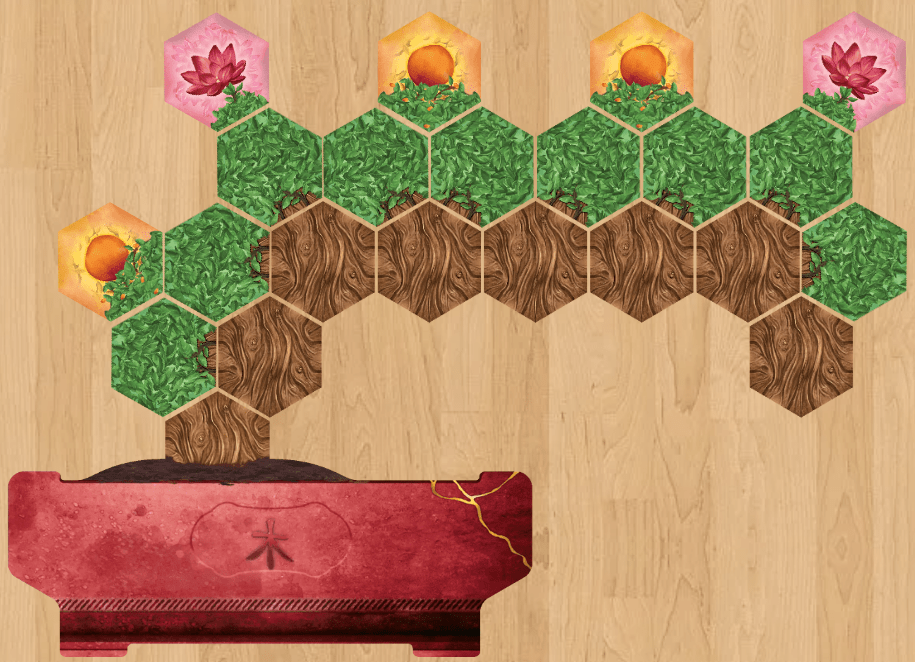
Bonsai is a serene tile placement game, where you build a bonsai tree, designing it in such a way to maximize the points that can be gained from specific elements of the tree like fruit and flowers. On a player’s turn, they can either place tiles and grow their tree, or select a card from the market. These cards confer their own rewards, but also grant tree tiles based on their position on the board. Taking cards is the only way to get tree tiles, either from the cards themselves or from the market space.
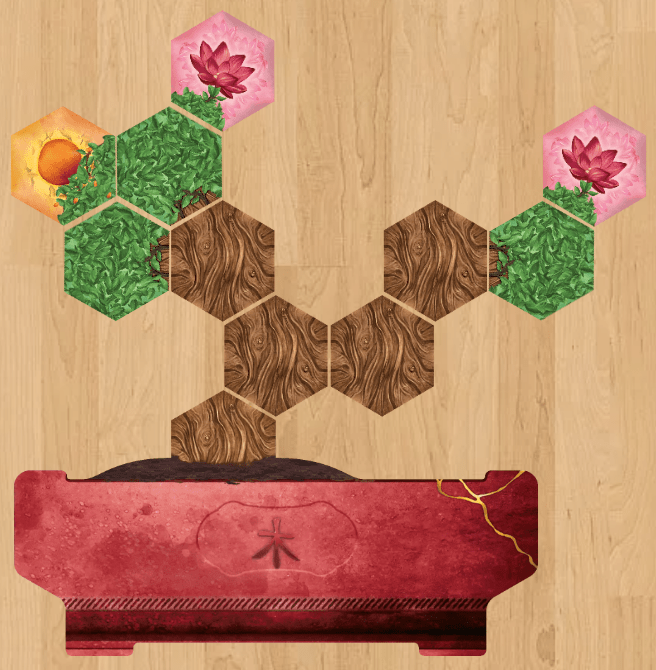
The main decision point of the game is when to take cards versus when to grow your tree. However, this decision can become forced, as you can only store a certain number of tree tiles based on how many tool cards you have. If you take more than your limit you must discard down. It’s rarely advantageous to grow your tree if you are well under your limit, so typically you acquire advantageous cards until you must grow your tree.
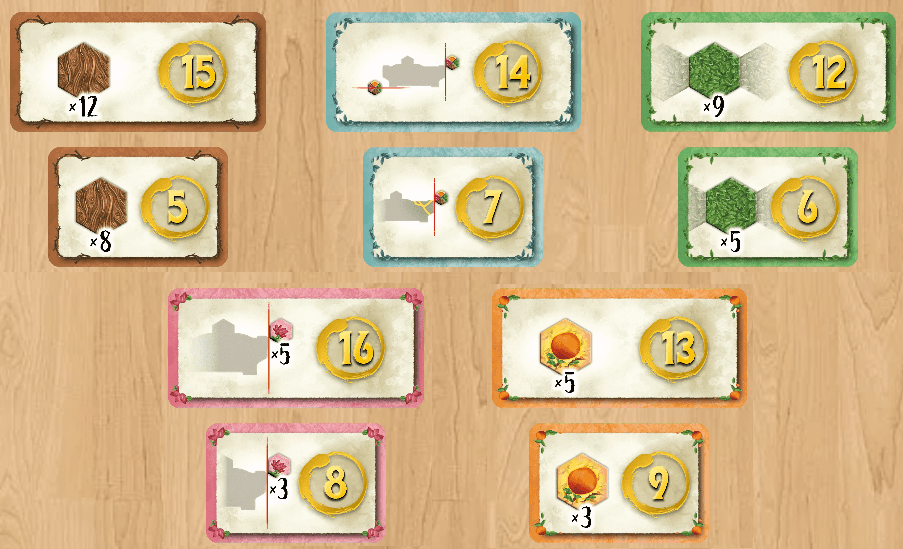
The main exception to only growing your tree when forced to is with the goal cards. Each game will have a set of goals, in a two tiered system. If you are the first to meet the criteria for a goal, you must choose to either take that goal or renounce it, allowing you to seek the higher tier goal. However, if someone beats you to that or you just can’t attain it, you can never go back and claim the lower level goal. This creates a few different race conditions which players can choose to focus on or not, requiring specific types of tiles in your tree or ways of developing your tree.
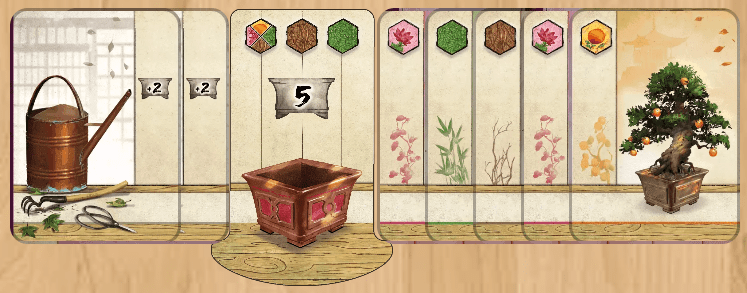
There are a few different types of cards available in the market. Growth cards get added to your Seishi, and allow you to place more of a given type of tile into your tree when you grow your tree. Tool cards also are added to your Seishi, and allow you to hold more tiles overall, with five being the starting limit.
There are two types of cards which grant tile utility. Master cards give the player additional tiles, and Helper cards allow the player to play some tiles into their tree when the card is taken. Helper cards can be especially strong, as they allow you to both gain and use tiles in a single action, rather than having to dedicate an entire action to growing your tree.
Finally, there are Parchment cards, which provide end game scoring for the possessing player for a specific condition. These exist for pretty much all tile and card types with the exception of tools.
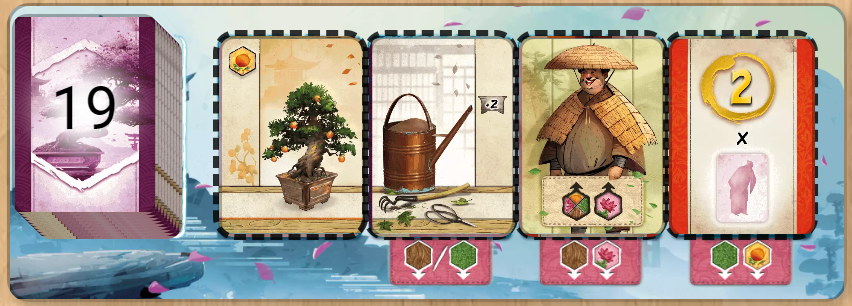
When the last card of the deck is revealed, game end is triggered and all players get one last turn. After that, all goals, Parchment cards, and tree tiles are scored, and the player with the most points wins.
General Impressions
Bonsai is a serene play experience, which fits with its theme. The gameplay itself rarely provides any moments where the game hinges on a knife edge or where another player completely ruins all of your plans. The goals play an oversized role in how any given game will play out, as they are worth significant points. The game plays fairly quickly, and doesn’t play significantly differently at any given player count.
As a real world bonsai enthusiast, the game does have one frustrating element, being that it is rarely advantageous to build a beautiful tree. Beautifully designed trees will almost always score worse than those designed to maximize action economy and scoring. High tier play results in some pretty ugly creations.
BGA Particulars
Bonsai is the first Board Game Arena game that I have spotlighted which I also own a physical copy of the game. BGA as usual provides fast and reliable end game scoring. As someone who is perpetually fixing and straightening tiles in alignment with each other, there’s a certain advantage to perfectly placed tiles in digital format. That said, there’s something lost in the experience of crafting your tree with your own hands, even if it’s just a board game tree.
At the time of writing, there is a visual defect when playing on mobile in portrait mode where larger trees will cover up elements of the game, such as the market rewards and cards. This can be overcome by switching to landscape mode, even if only long enough to see and interact with what you need to.
Fun Factor
After several game plays, Bonsai has begun to feel pretty samey. There’s not enough depth or duration to the game to really explore radically different strategies, and the best trees will consistently be the best, making the game a matter of flip luck and river management. The game is a peaceful, somewhat artistic experience.
Next Up
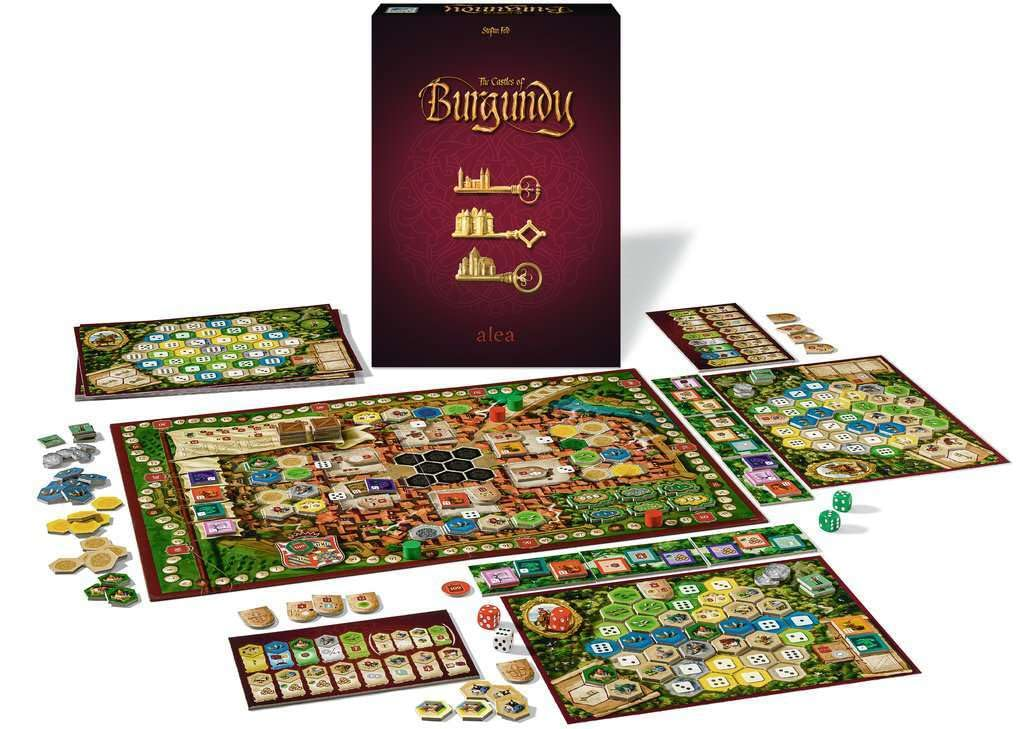
I’ll be spotlighting next a popular game I have intended to play for a long time, Castles of Burgundy. Most hobby board gamers are familiar with this one, and it’s highly placed on the Board Game Geek best games list, but I’m excited to try it out for the first time.

 I'd Rather Be Board Gaming
Leave a comment